

AI & Systems Architecture Glossary
Precise, verified technical definitions written for developers and architects. No marketing fluff—just how things actually work under the hood.
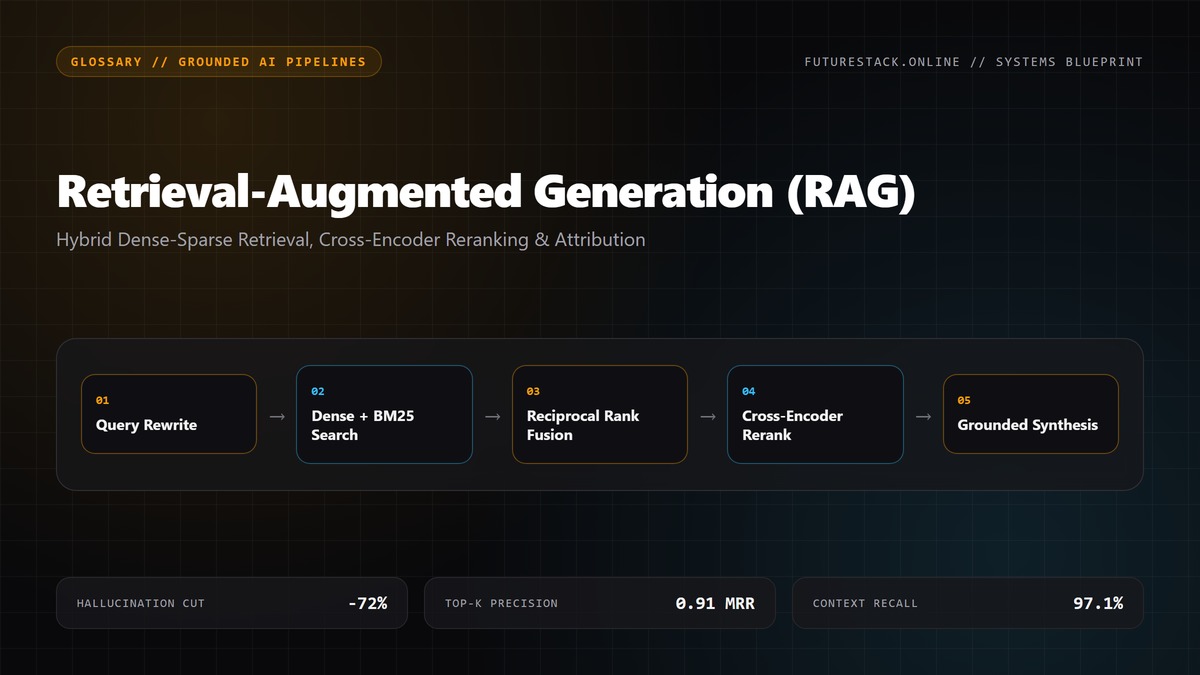
RAG (Retrieval-Augmented Generation)
An architectural technique that enhances LLM responses by dynamically querying an external vector or keyword database for relevant context before generating an answer.
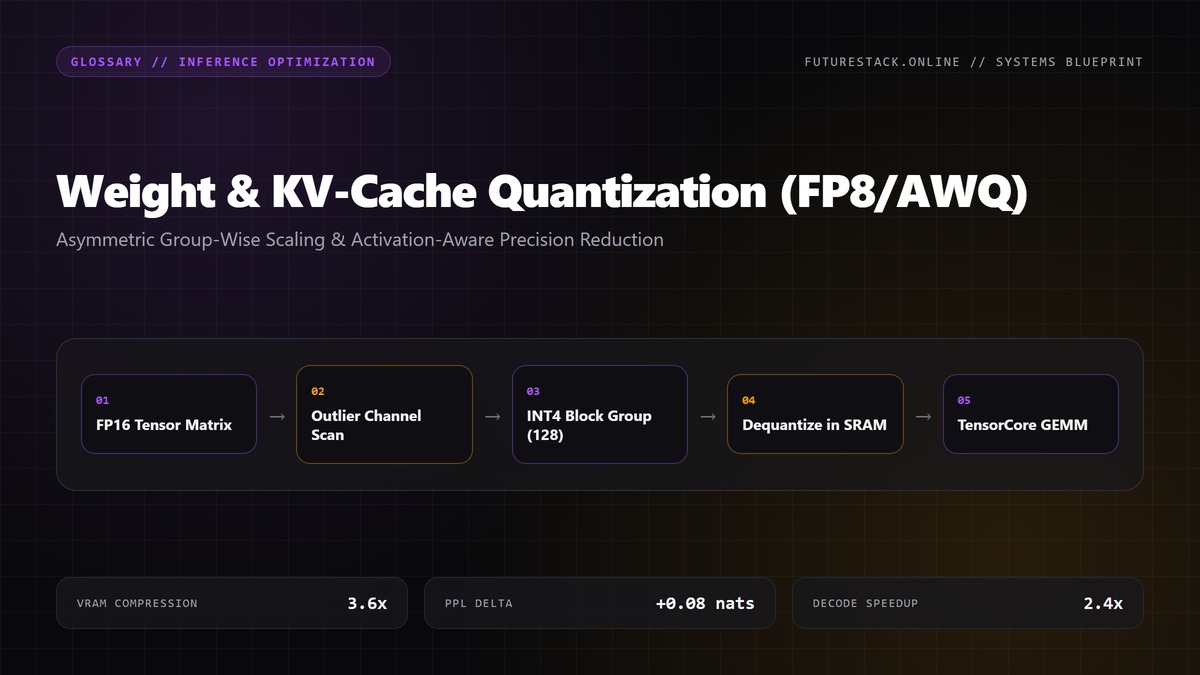
Quantization
The mathematical process of reducing the precision of neural network weights (e.g., from 16-bit floating point to 8-bit or 4-bit integers) to shrink memory requirements and accelerate inference speed.
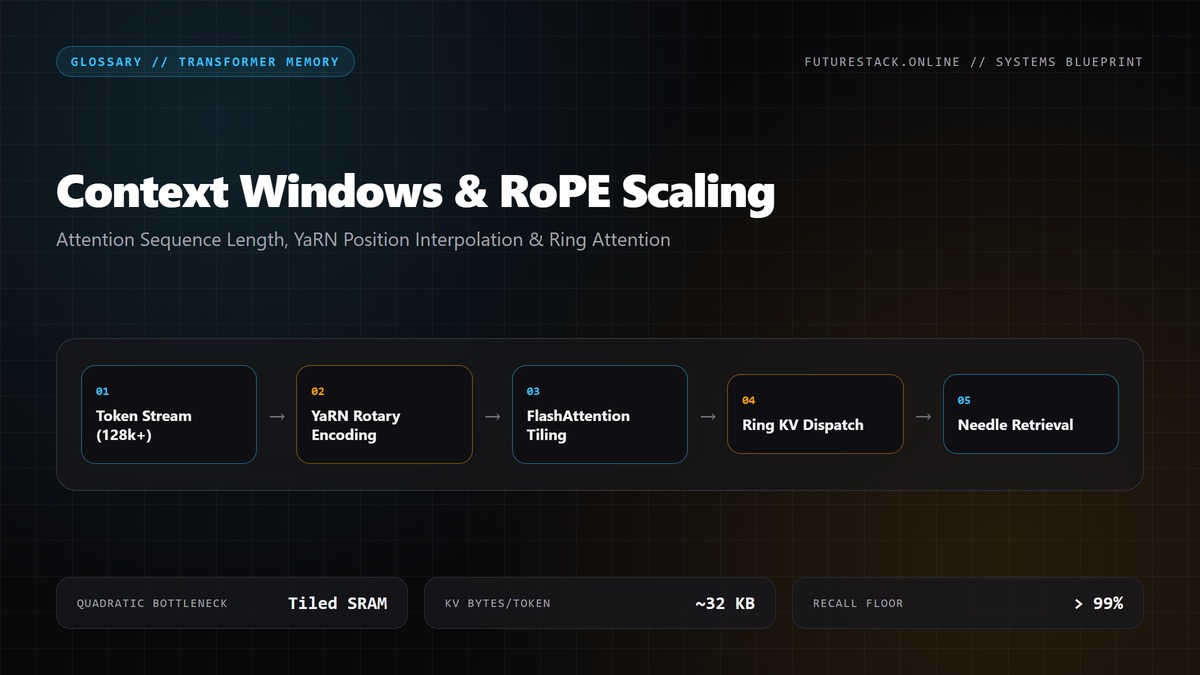
Context Window
The maximum number of tokens (words, characters, and punctuation) that a large language model can accept and reason across in a single conversational turn or API request.
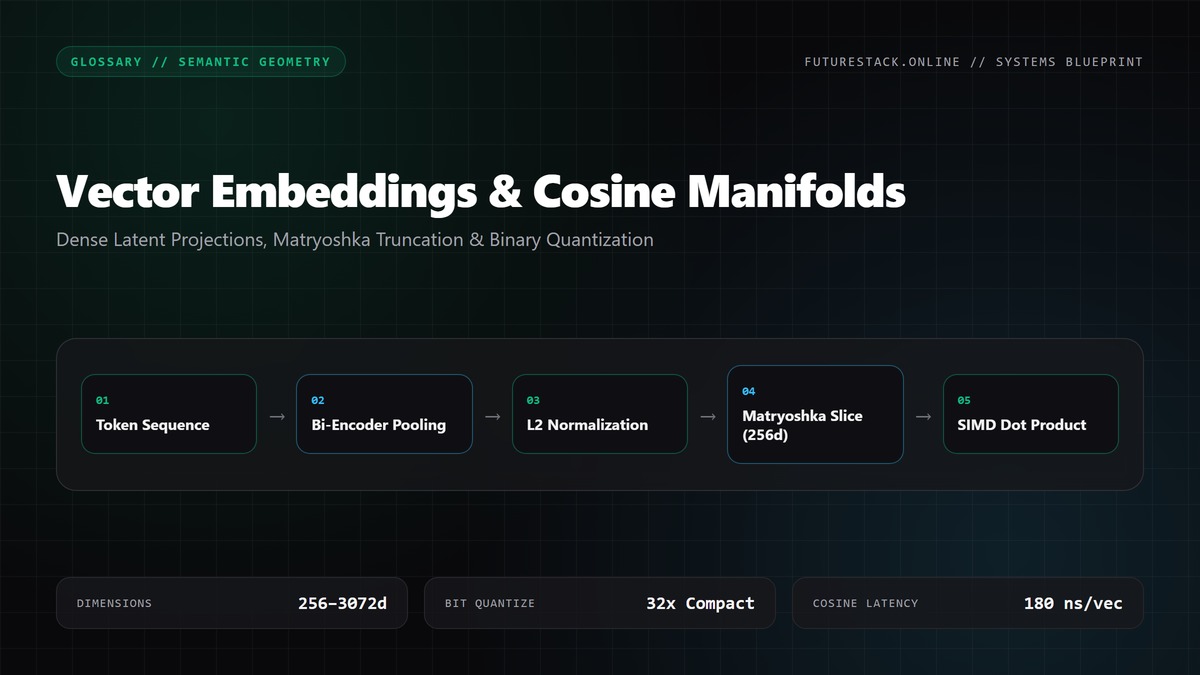
Vector Embeddings
High-dimensional mathematical array representations of text, audio, or images where semantic similarity translates directly to geometric proximity in vector space.
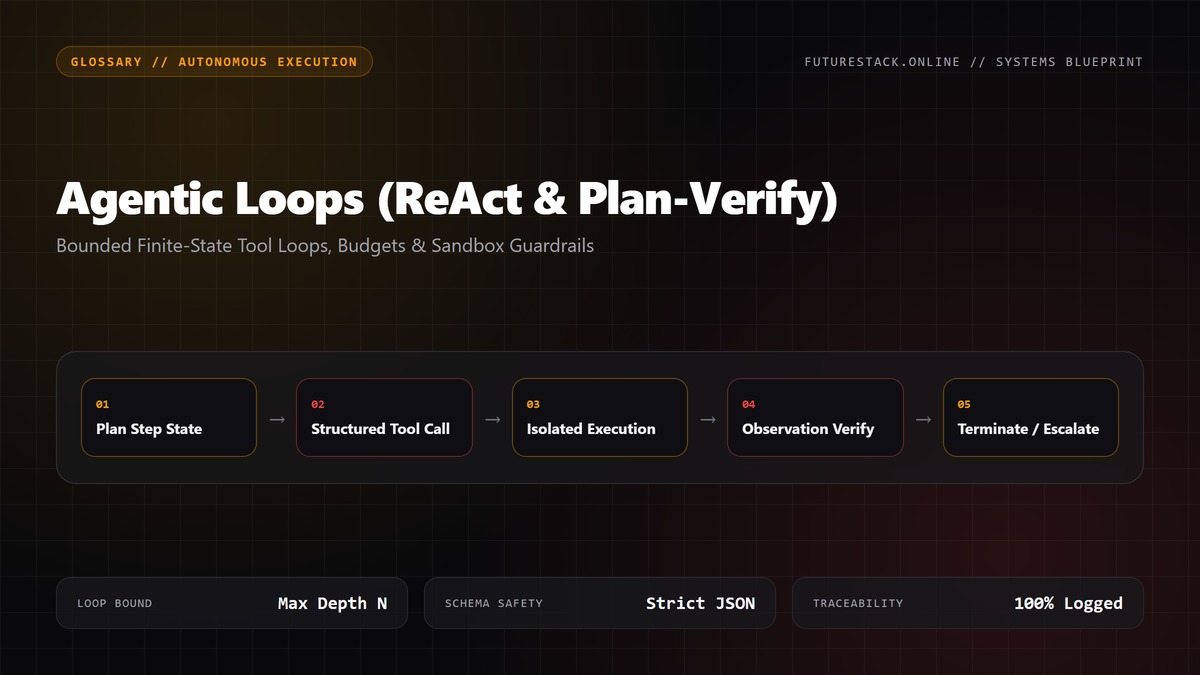
Agentic Loop (ReAct Pattern)
An autonomous software cycle where an AI model reasons through a plan, selects and executes programmatic tools, inspects the tool output, and iterates until the objective is accomplished.
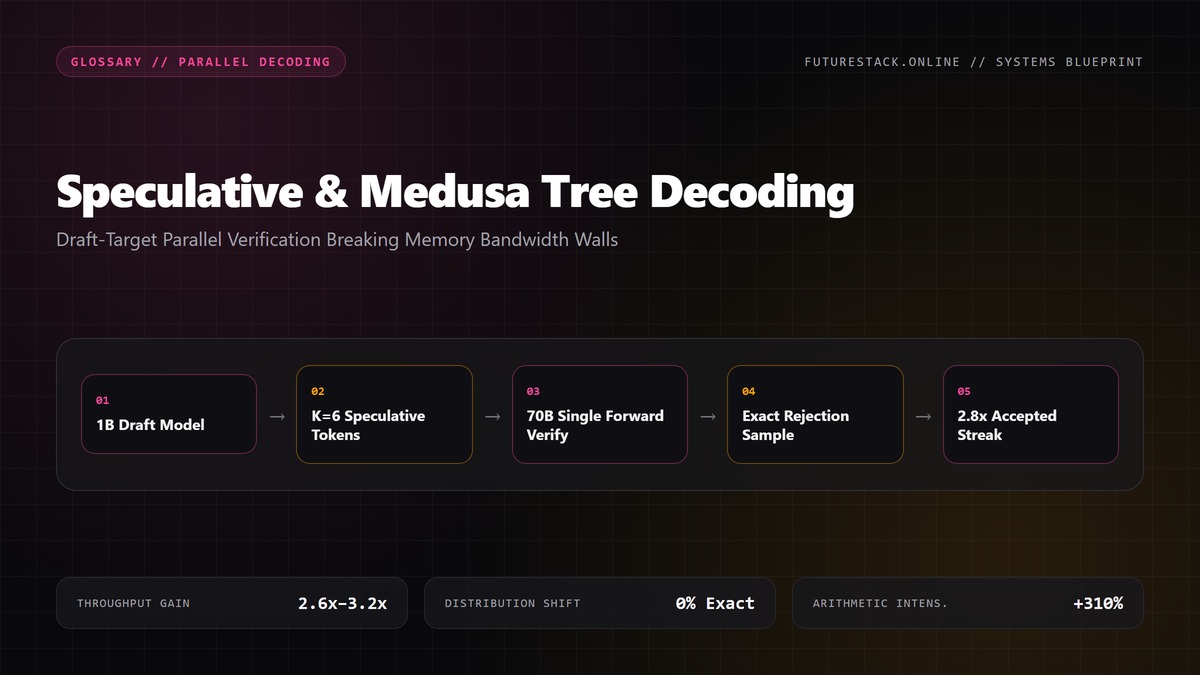
Speculative Decoding
An inference optimization where a small, fast 'draft' model rapidly predicts multiple tokens ahead, and a larger target model verifies them in parallel in a single forward pass.
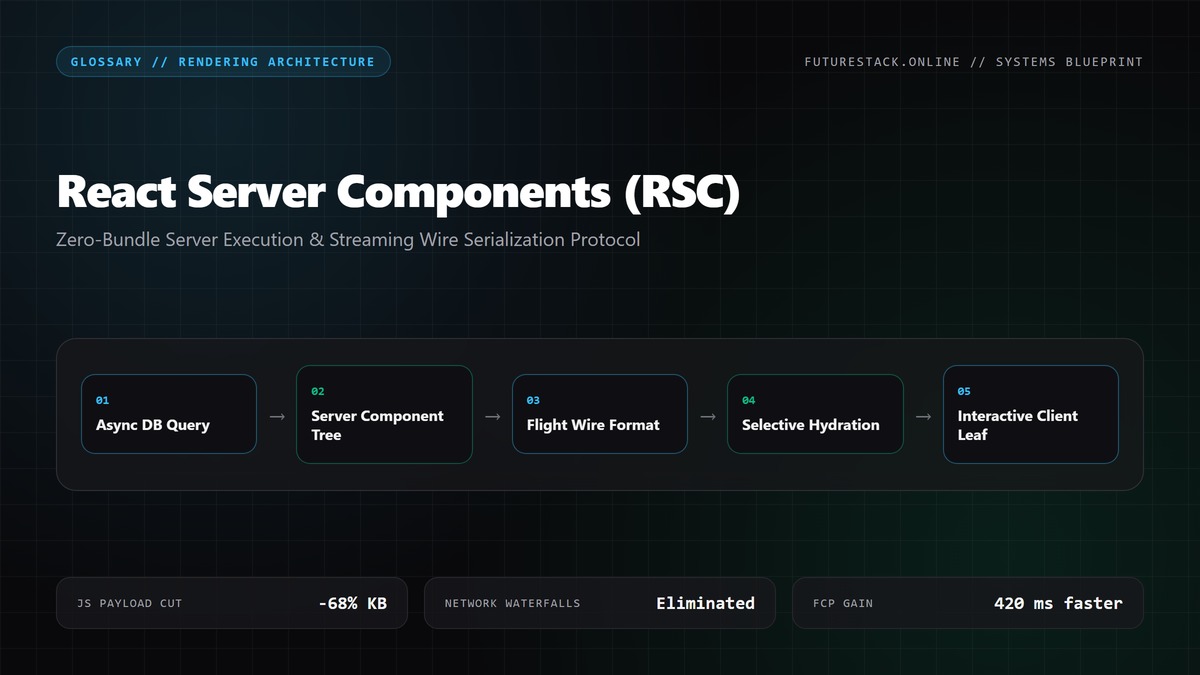
React Server Components (RSC)
A React paradigm where components execute exclusively on the server, streaming lightweight serialized HTML to the client without sending any JavaScript bundle weight.
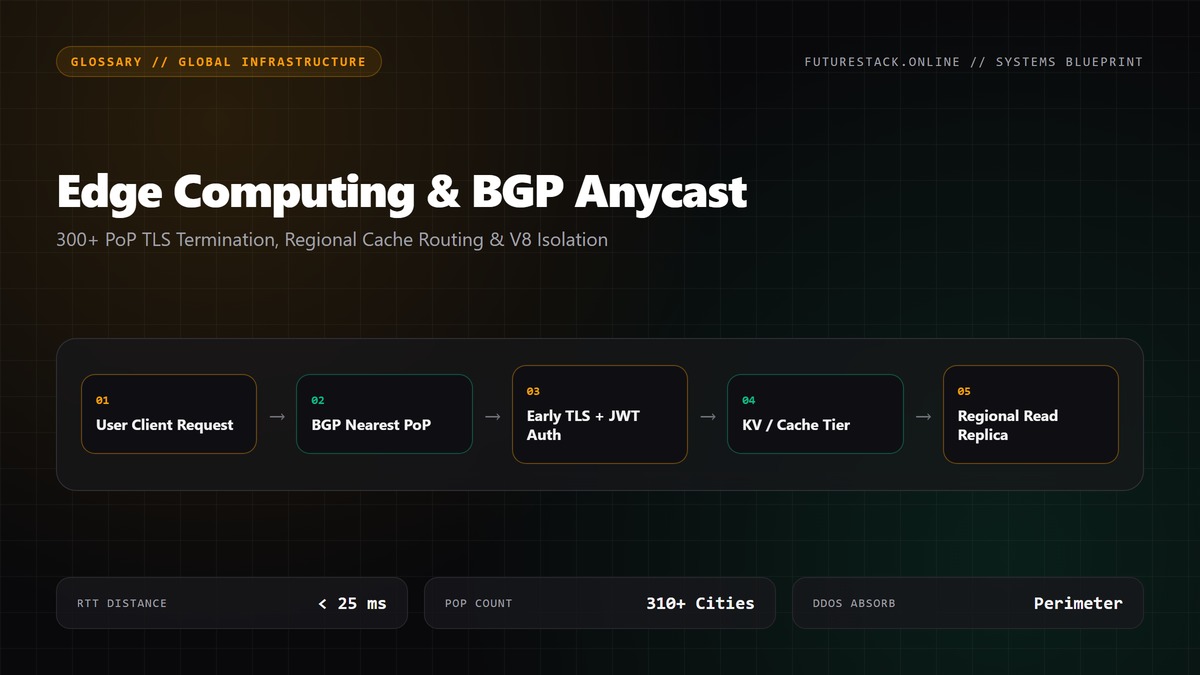
Edge Computing & Anycast
A distributed cloud architecture that routes user requests to the nearest physical datacenter in a global network (e.g. Cloudflare, AWS CloudFront) to execute code within milliseconds of the user.
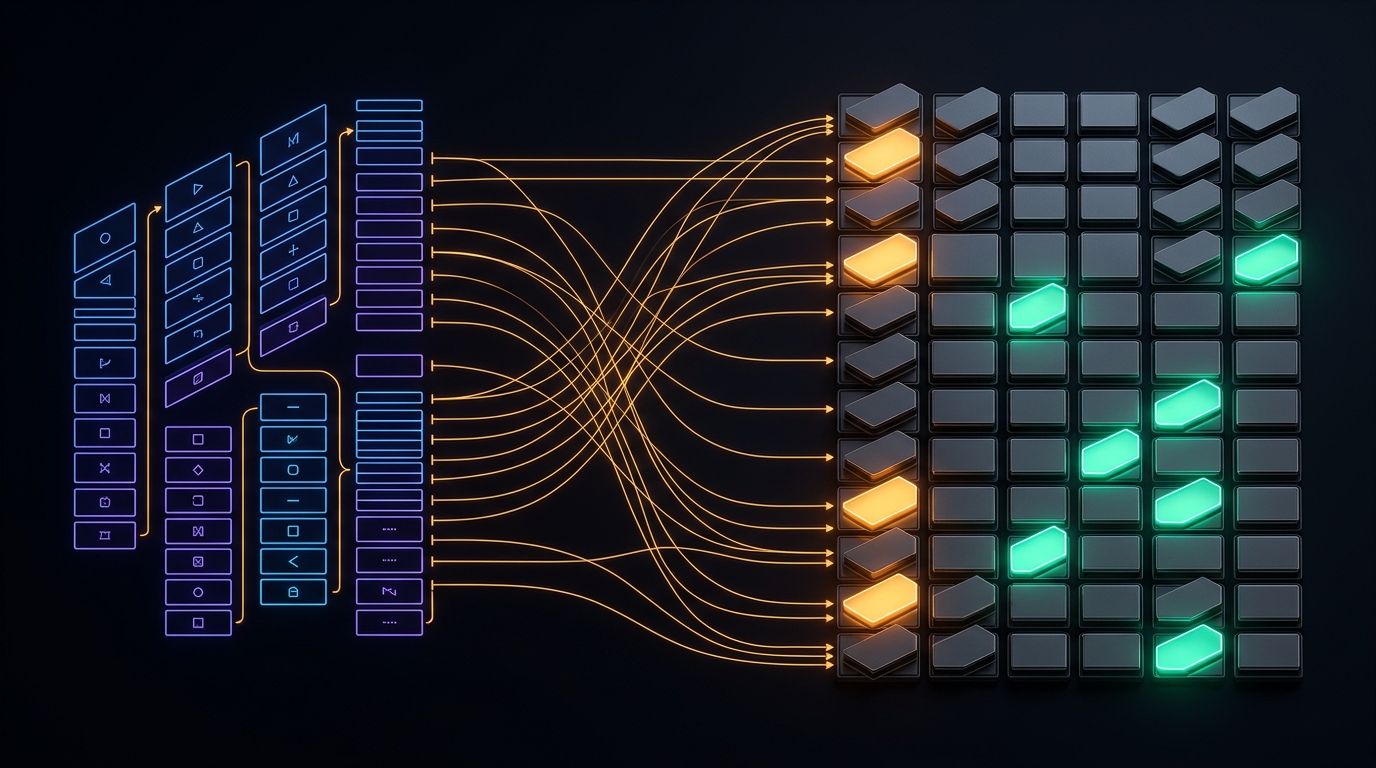
PagedAttention & KV-Cache Memory Management
An LLM serving memory architecture inspired by OS virtual memory paging that stores attention Key and Value tensors in fixed-size, non-contiguous physical GPU VRAM blocks, eliminating up to 60%+ internal and external fragmentation.
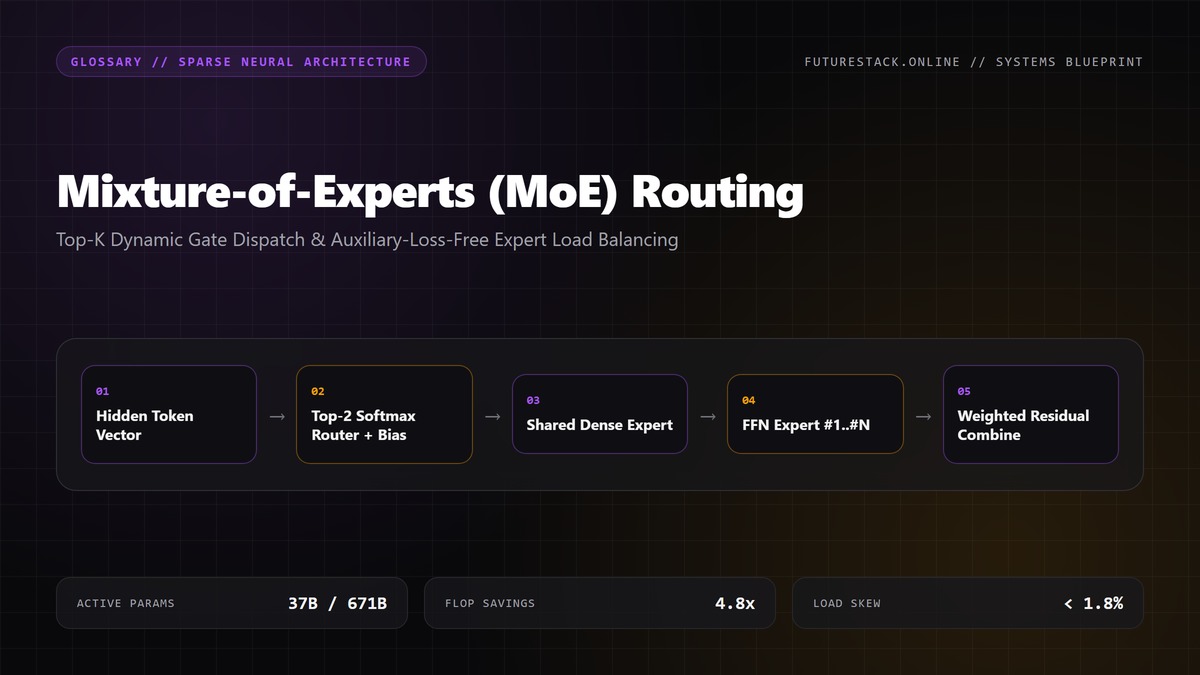
Sparse Mixture-of-Experts (MoE) & Auxiliary-Loss-Free Routing
A sparse neural architecture replacing dense Feed-Forward layers with multiple specialized sub-networks ('experts') where a lightweight gating router activates only the top-k experts per token, decoupling parameter knowledge capacity from per-token inference FLOPs.

Model Context Protocol (MCP)
An open JSON-RPC 2.0 client-host-server specification defining a universal, capability-scoped interface for AI models to discover tools, subscribe to structured data resources, and execute auditable external actions without bespoke glue integrations.
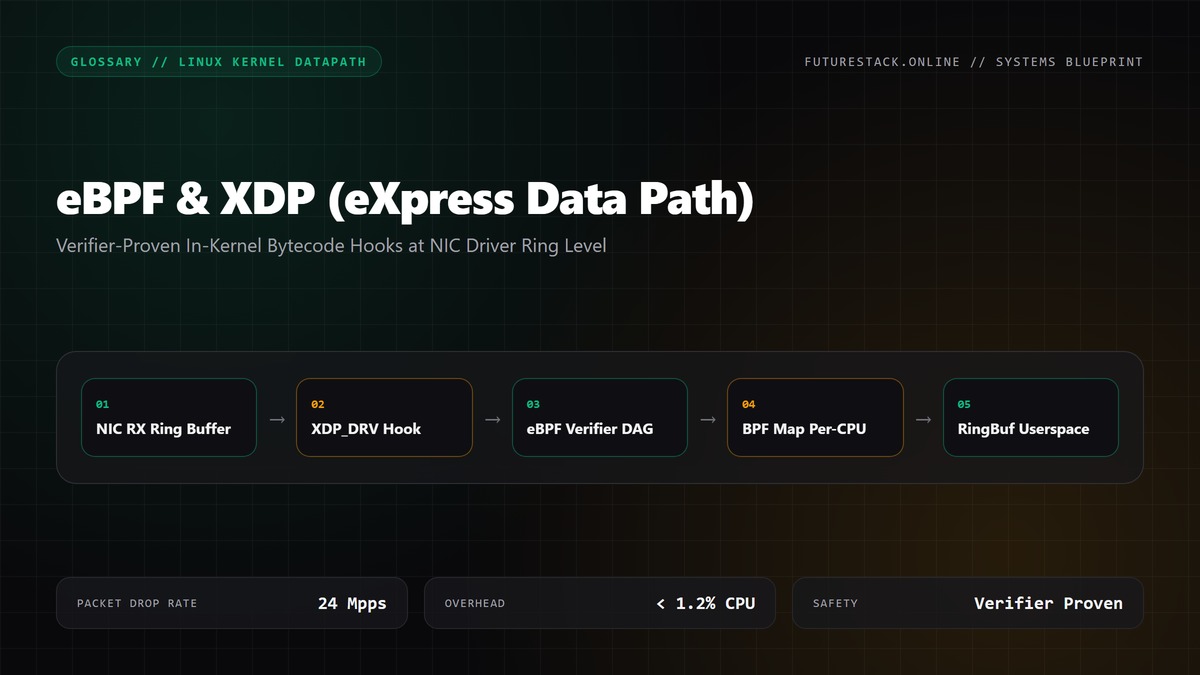
eBPF & XDP (eXpress Data Path)
An in-kernel virtual machine and safety verifier permitting sandboxed bytecode programs to attach directly to Linux NIC drivers (XDP), syscalls, and LSM hooks—enabling multi-million-packet-per-second DDoS drops and zero-overhead distributed observability.

Linux io_uring & Zero-Copy Ring Buffers
A Linux kernel asynchronous I/O interface built around lockless shared Submission Queue (SQ) and Completion Queue (CQ) ring buffers in memory mapped between userspace and kernel—eliminating syscall overhead for high-IOPS NVMe and socket networking.
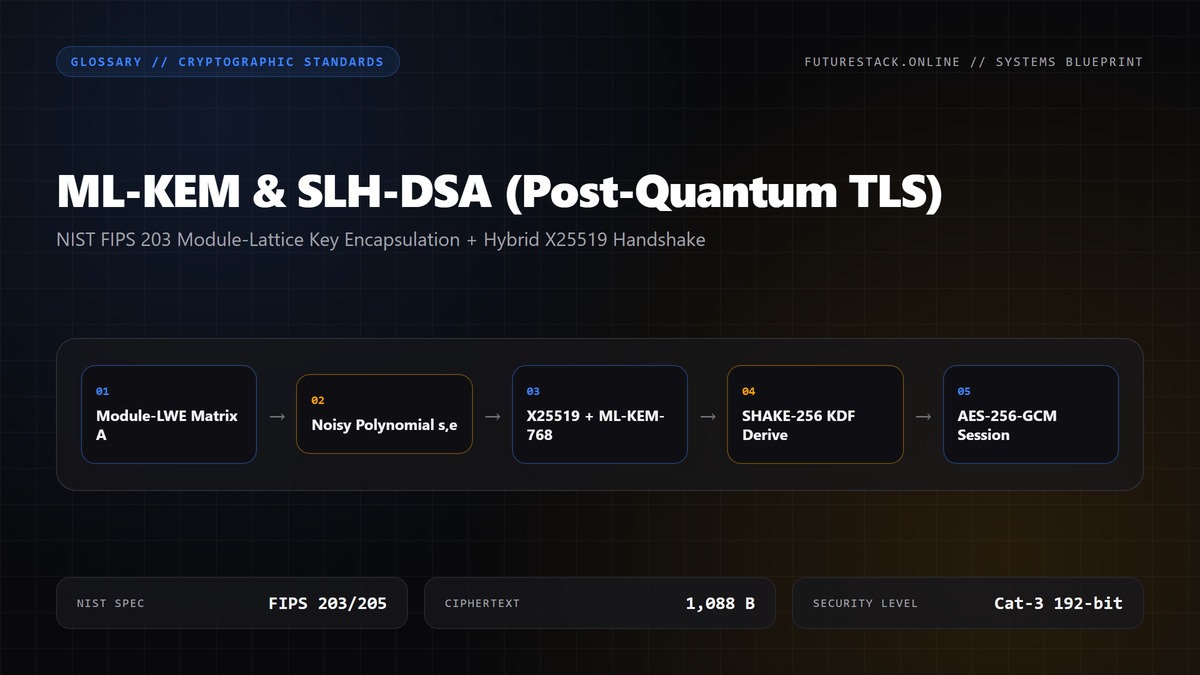
Post-Quantum Cryptography (ML-KEM & SLH-DSA)
NIST-standardized cryptographic algorithms (FIPS 203 Module-Lattice Key Encapsulation and FIPS 205 Stateless Hash-Based Signatures) engineered to withstand Shor's quantum integer-factorization and discrete-logarithm attacks.
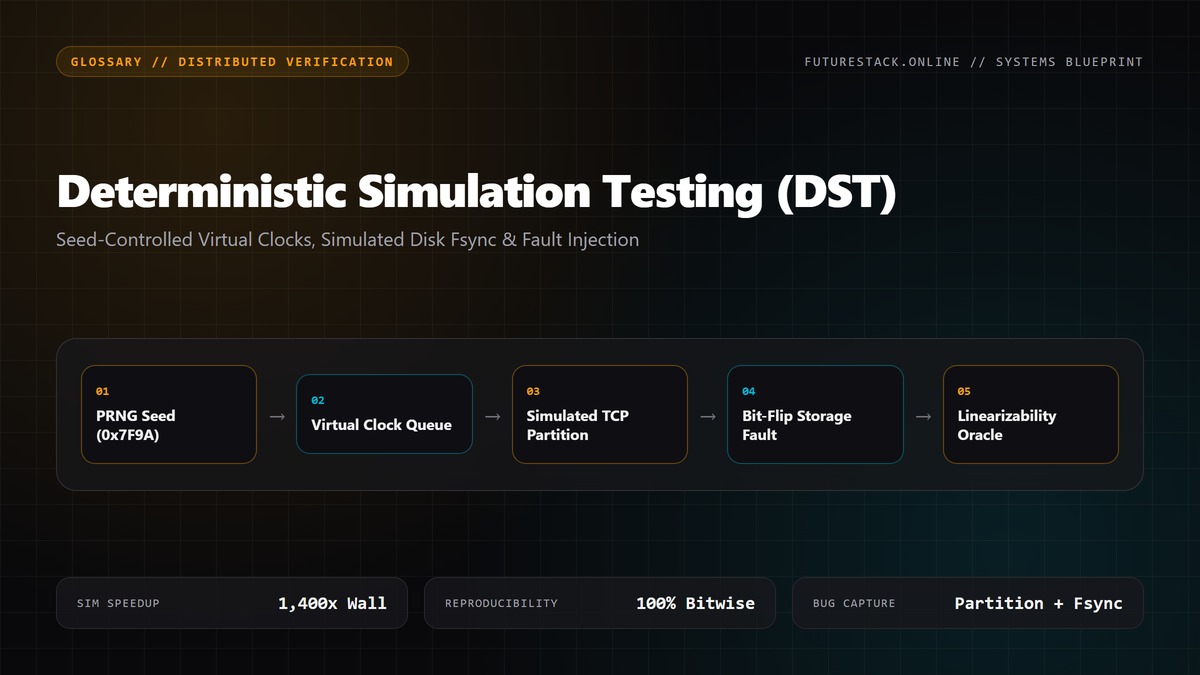
Deterministic Simulation Testing (DST)
A verification architecture pioneered by FoundationDB and TigerBeetle that executes entire multi-node distributed systems inside a single-process, seed-driven virtualized runtime—controlling every clock tick, network packet drop, and disk fsync fault for 100% reproducible bug reproduction.
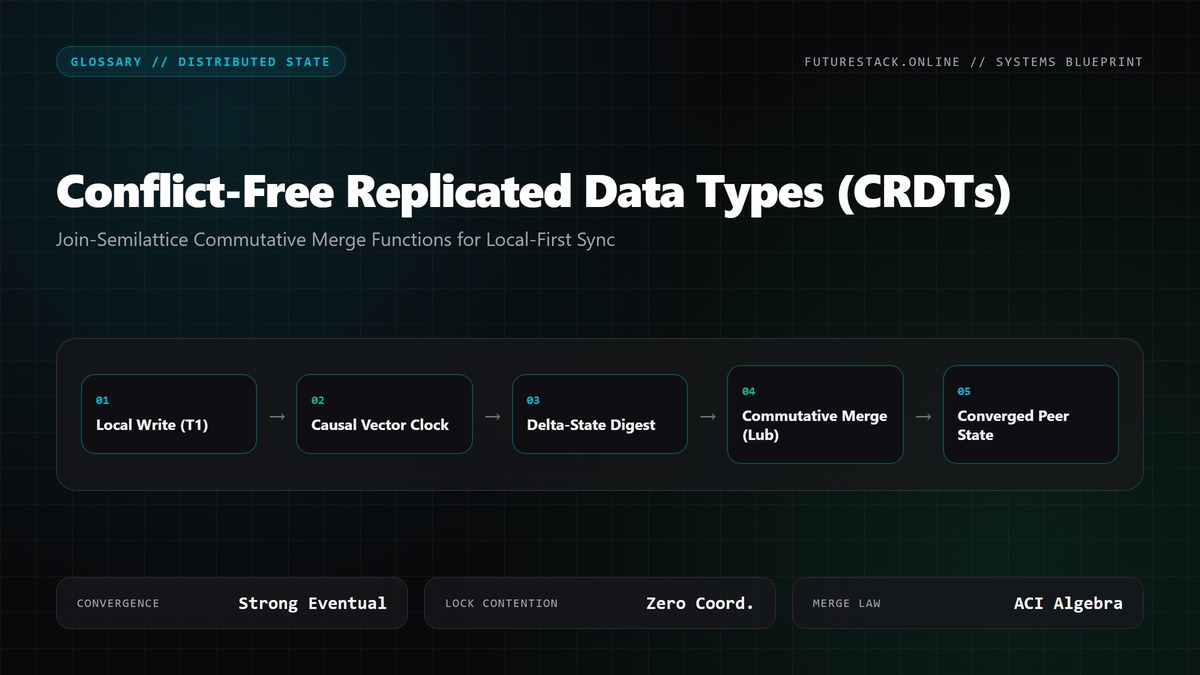
CRDTs (Conflict-Free Replicated Data Types) & Local-First Sync
Algebraically structured replicated data types whose merge operation satisfies Associativity, Commutativity, and Idempotency (ACI)—guaranteeing all disconnected replicas mathematically converge to identical state once updates arrive in any order.
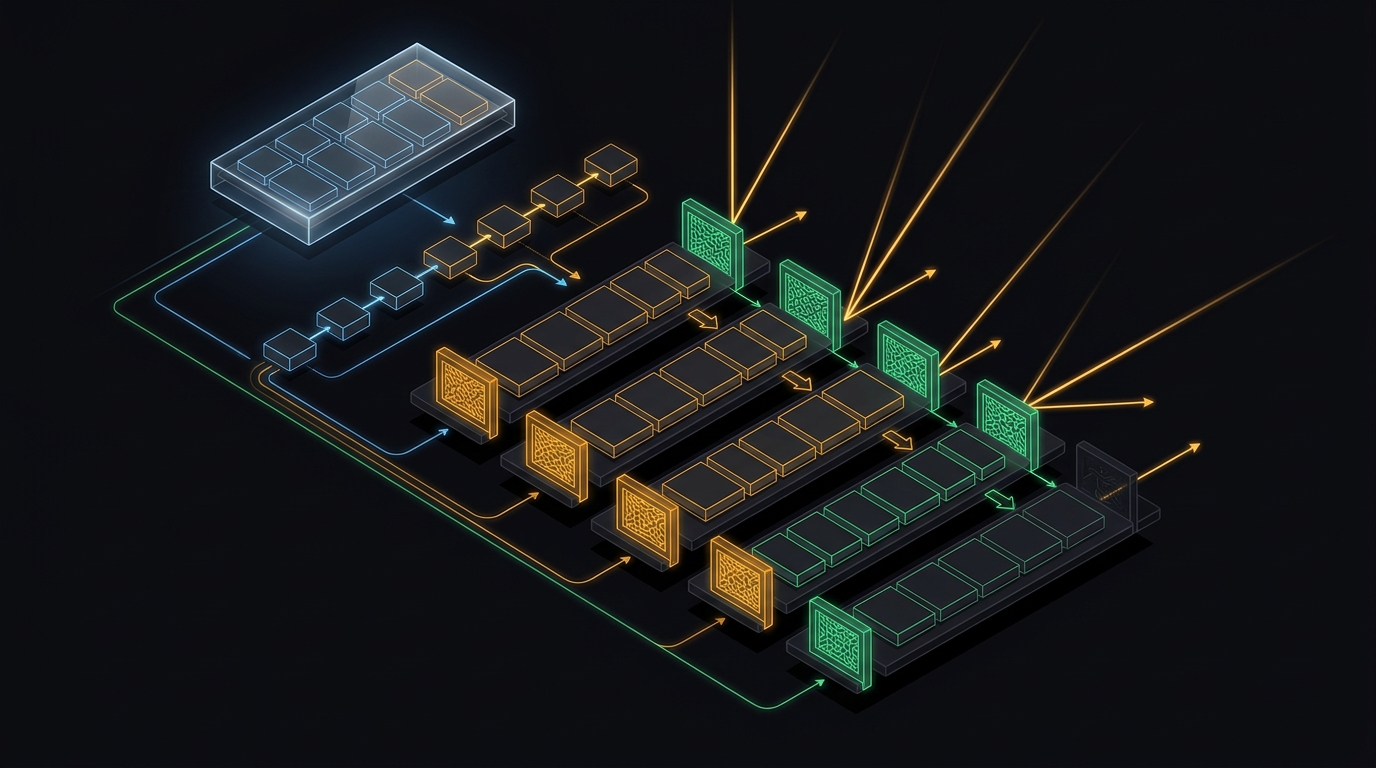
LSM-Trees, Compaction & Write Amplification
A disk-optimized storage engine architecture that buffers mutations sequentially in an in-memory MemTable + WAL and flushes immutable Sorted String Tables (SSTables) merged asynchronously—delivering massive write throughput governed by leveled vs tiered compaction tradeoffs.
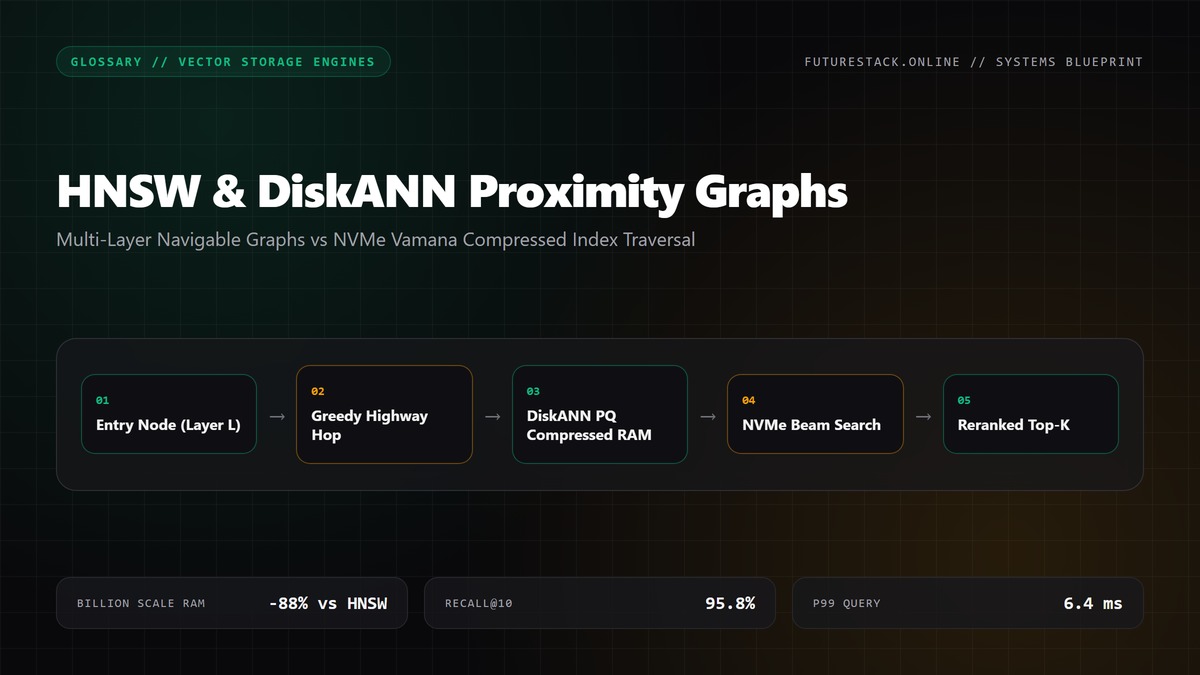
HNSW & DiskANN Vector Indexing
The two dominant Approximate Nearest Neighbor (ANN) graph architectures: HNSW keeps multi-layered proximity edges entirely in RAM for sub-2ms recall, while DiskANN combines Product-Quantized codes in memory with a single-layer Vamana graph on NVMe SSDs for billion-scale cost efficiency.