FutureStack
LIVE RANDOMIZED EDITION141 Research Essays•13 Roadmaps•18 Glossary Terms•14 Benchmarks•8 Free Tools•18 Disciplines
Systems, Artificial Intelligence & Production Infrastructure

Deep Engineering Intelligence for Builders at Scale.

Independent architectural investigations, multi-phase engineering roadmaps, systems terminology, and empirical benchmark comparisons—dynamically ranked and refreshed on every load.

Randomized Algorithmic Selections

Weighted by technical engagement velocity, novelty decay & dynamic discovery

View full archive
Advertisement•Sponsored
Google AdSense Ready

Responsive Ad Placement (728×90 / Dynamic). Live ads will serve once your publisher ID is linked.

Pillar Engineering References • Shuffled Each Load

Engineering Roadmaps, Systems Glossary & Benchmarks

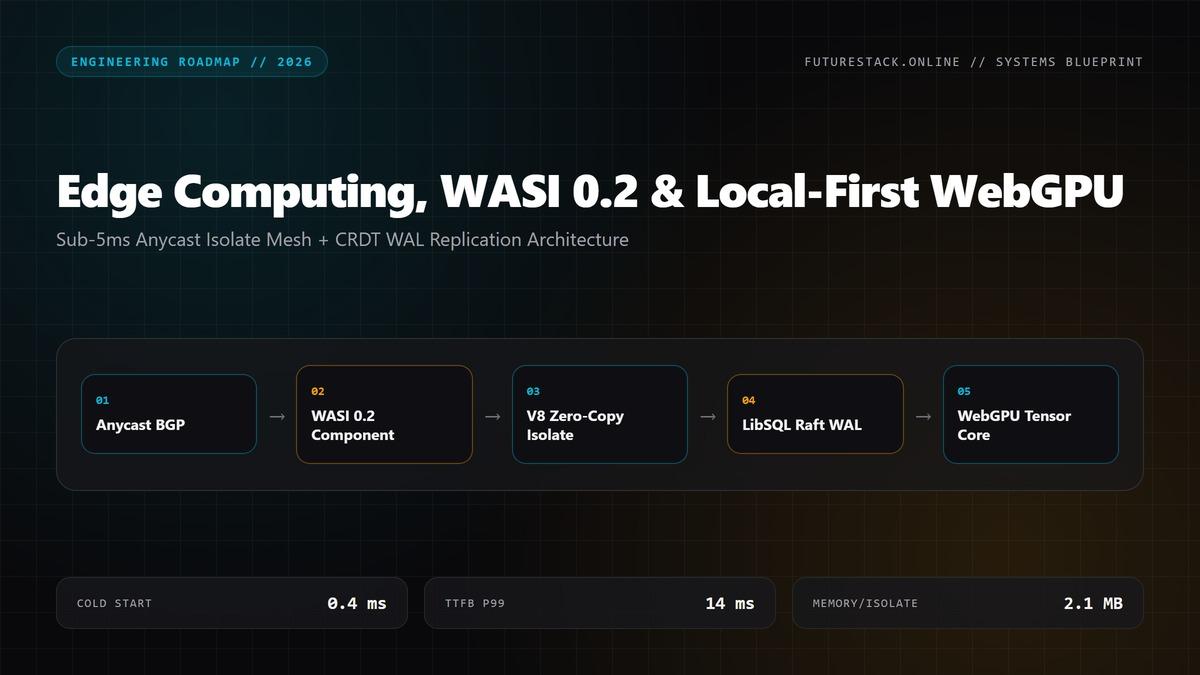
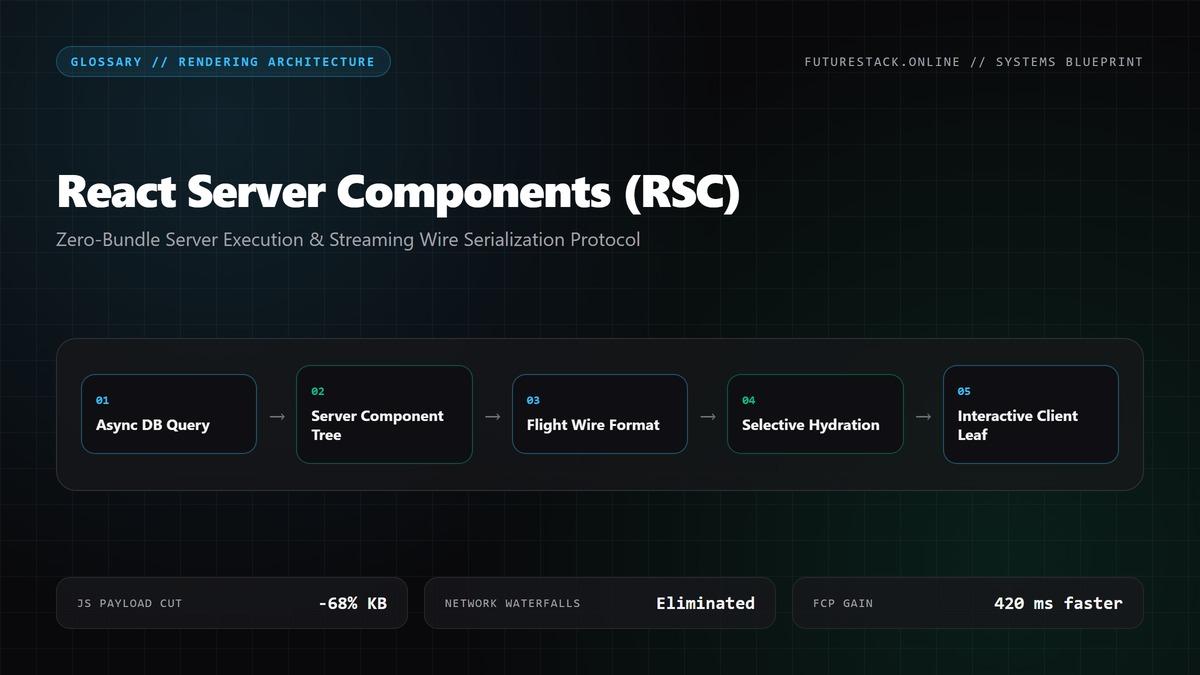
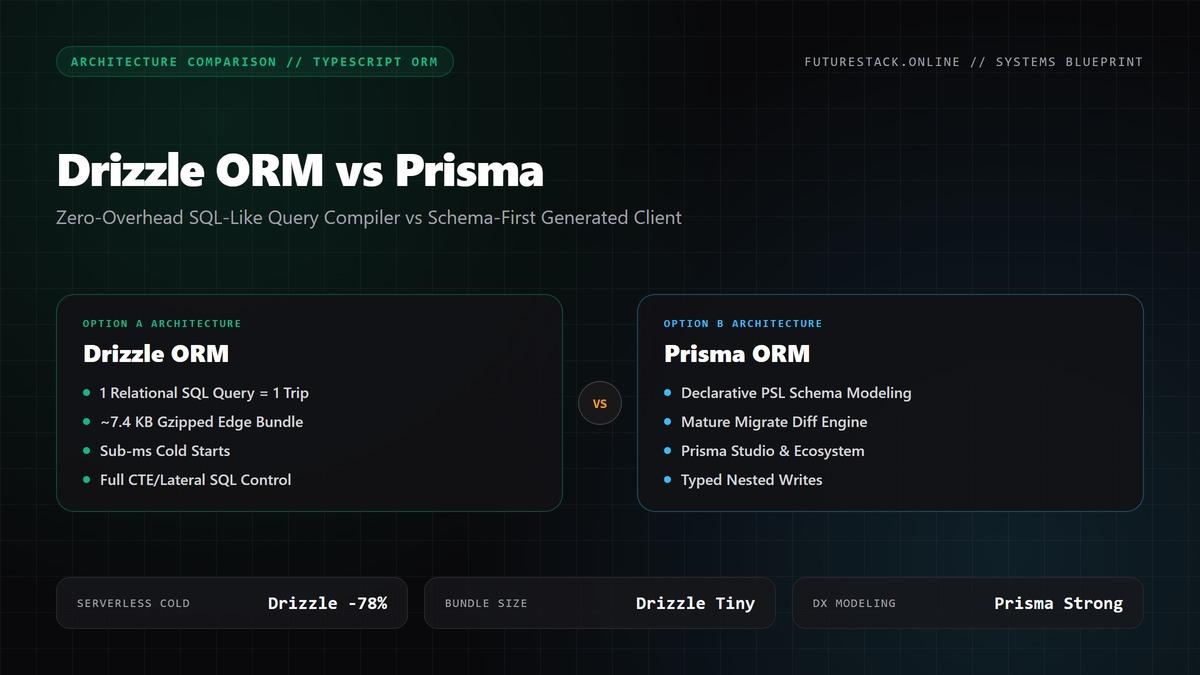
Randomized selection from 13 zero-to-production roadmaps, 18 longform systems glossary entries, and 14 architectural head-to-head comparisons.

100% Free • Runs Safe in Browser • 8 Tools

Free Tools — Fast, Private & Easy to Use

Complete Engineering Taxonomy • 18 Tracks

Explore All Categories

Filter live archive →
Track80 essays

AI Engineering

Production LLM architectures, MoE models, test-time compute, RAG pipelines, and applied AI systems.

Track27 essays

Autonomous Agents

Multi-agent orchestration, state graphs, Model Context Protocol (MCP), tool verification, and agentic workflows.

Track23 essays

Distributed Systems

Consensus protocols (Raft, Paxos), event sourcing, CQRS, Saga orchestration, and fault-tolerant replication.

Track62 essays

Cloud Architecture

Kubernetes multi-tenancy, FinOps cost modeling, geo-distributed infrastructure, edge runtimes, and serverless patterns.

Track42 essays

Systems Craft

Low-level systems programming in Rust, C++23, and Zig; Linux kernel io_uring, memory allocators, and kernel bypass.

Track9 essays

Database Engineering

PostgreSQL internals, pgvector indexing (HNSW/DiskANN), ClickHouse columnar OLAP, and distributed SQLite engines.

Track23 essays

Cybersecurity

Zero Trust micro-segmentation, mTLS/SPIFFE, post-quantum cryptography (ML-KEM), and LLM red-teaming defense.

Track16 essays

LLM Inference & GPUs

Speculative decoding, KV-cache compression, PagedAttention, WebGPU tensor sharding, CUDA kernels, and vLLM.

Track22 essays

Web & Edge Runtime

Next.js 15 App Router, React Server Components, V8 isolates, WebAssembly at the edge, and global ISR caching.

Track19 essays

DevOps & Observability

eBPF kernel telemetry, XDP packet inspection, Chaos Engineering, OpenTelemetry tracing, and production SRE.

Track12 essays

Data & Lakehouse

High-throughput event streaming, NVMe zero-copy I/O, SIMD vectorized OLAP analytics, and Apache Iceberg lakehouses.

Track7 essays

Developer Tooling

Compiler IR optimizations, SSA form vectorization passes, LLVM internals, static verification, and build pipelines.

Track5 essays

Design Engineering

Minimalist monochrome UI systems, typographic precision, interactive ergonomics, and modern frontend craft.

Track82 essays

Artificial Intelligence

Deep explorations into neural architectures, frontier foundation models, and machine reasoning research.

Track133 essays

Software Engineering

Full-stack system design, maintainable codebases, API contracts, concurrency primitives, and engineering rigor.

Track6 essays

Venture Capital & Tech

Startup sourcing mechanics, scout programs, AI seed ecosystems, capital allocation, and market moats.

Track12 essays

Startups & Strategy

Building zero-to-one technology ventures, product momentum, monetization models, and founder playbooks.

Track5 essays

Ethics & Culture

Critical commentary on AI copyright law, intellectual property, synthetic media, and digital authorship.

From the Systems & AI Archive

Randomly surfaced deep dives across memory models, consensus protocols, and distributed web infrastructure

Browse complete library
Beyond the H100: A Deep Architectural Dive into Nvidia’s Next‑Generation AI Engine
Software Engineering

Beyond the H100: A Deep Architectural Dive into Nvidia’s Next‑Generation AI Engine

Nvidia’s upcoming Blackwell‑B architecture redefines the compute‑memory balance for trillion‑parameter models, exposing new latency‑aware pathways for system designers. This editorial unpacks the silicon, critiques common engineering pitfalls, and offers a production‑ready implementation blueprint.

Nov 16, 2026 8 min read
From Dream to Dust: Architectural Lessons from the AI Graveyard
AI Engineering

From Dream to Dust: Architectural Lessons from the AI Graveyard

A forensic look at why high‑profile AI projects—from Siri’s endless delays to OpenAI’s chaotic super‑app—failed at the systems level. The analysis uncovers repeatable architectural anti‑patterns and offers a resilient blueprint for the next generation of AI products.

Nov 14, 2026 8 min read
When Nvidia Falters: Architectural Ripples Across the AI Ecosystem
AI Engineering

When Nvidia Falters: Architectural Ripples Across the AI Ecosystem

Jensen Huang's latest setback at Nvidia sends shockwaves through every AI startup that depends on GPU horsepower. This deep‑dive unpacks the hardware underpinnings, shows why the ripple is more than a market story, and offers a concrete blueprint for engineering resilience.

Nov 16, 2026 8 min read
Syndication, RSS & Machine-Readable Endpoints

Subscribe via RSS, Sitemaps & LLM Feeds

Every article, engineering roadmap, systems glossary entry, and architectural benchmark is published simultaneously in open syndication formats for engineers, aggregators, search crawlers, and AI retrieval pipelines.

Join Engineering Dispatch
Production Systems Rigor

Architecture Beyond Surface Hype

FutureStack investigates the low-level mechanics driving modern computing—examining kernel-bypass networking (io_uring, eBPF/XDP), consensus safety in distributed logs, columnar OLAP compression, and multi-tenant Kubernetes resource isolation. Every essay avoids abstract marketing summaries in favor of failure modes, latency percentiles, and concrete implementation code.

AI Inference & Agentic Design

Deterministic & Agentic Blueprints

From PagedAttention KV-cache scheduling and speculative decoding to Model Context Protocol (MCP) tool sandboxing and hierarchical retrieval pipelines, our publications trace real production trade-offs across throughput, memory bandwidth, OWASP LLM threat surfaces, and inference unit economics.

Open Standards & Verifiability

Cross-Linked Reference Graph

Articles connect directly into FutureStack's curated engineering roadmaps, systems glossary, and benchmark comparisons, alongside primary RFC specifications, peer-reviewed research papers, and official documentation.

Platform & Indexing Reference

Frequently Asked Questions

How does FutureStack rank and discover articles on the homepage?

Every page load evaluates engagement velocity (reads, claps, bookmarks, comments) with a time-decay gravity curve, then applies an anti-stagnation shuffle across top candidates and deeper archive dispatches so fresh publications and evergreen systems essays surface continuously.

Where can machines, AI agents, and feed readers ingest FutureStack?

Subscribers and crawlers can consume the live RSS 2.0 syndication feed at /feed.xml, the dynamic XML sitemap at /sitemap.xml, the compact AI directory at /llms.txt, and the full-text knowledge corpus at /llms-full.txt.

What engineering topics and knowledge hubs does FutureStack cover?

FutureStack spans 18 core disciplines—from LLM inference optimization, autonomous AI agents, Rust systems programming, Linux eBPF/io_uring, and distributed databases to Kubernetes, cloud architecture, cybersecurity, and production web infrastructure.

Do newly published articles appear automatically without manual rebuilds?

Yes. Both the homepage discovery engine, /blog archive, /category/[slug] pages, /feed.xml, /llms.txt, and /sitemap.xml render dynamically against live Firestore data so newly published articles go live immediately.

Open Publishing Network

Contribute Technical Research to FutureStack

Publish rigorous systems engineering dispatches, share reproducible benchmarks, and syndicate through our verified RSS, newsletter, and AI-indexed distribution channels.